

To calculate your Decimal as a fraction, enter the following details given below:
Decimal to Fraction Calculator
Supports positive, negative, whole numbers, long decimals, and repeating decimals (e.g. 0.333...)
Recent Conversions
Quick Navigation:
What Is a Decimal?
Decimal numbers provide a method to express all numbers which exist between two whole numbers. The word itself comes from the Latin decimus, meaning “tenth,” which gives you a clue about how the system works.
In a decimal number, everything to the left of the decimal point is a whole number, and everything to the right represents a fraction of one. For example, in the number 3.75, the “3” is the whole part, while “.75” means seventy five hundred or three quarters of a whole unit.
What Is a Fraction?
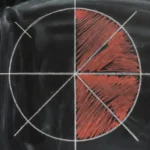
A fraction is a number written in the form a/b, where “a” is called the numerator (the top number) and “b” is the denominator (the bottom number). It tells you how many parts of a whole you’re working with. If you slice a pizza into 8 pieces and take 3, you have 3/8 of the pizza.
Proper Fractions
A proper fraction is one where the numerator is smaller than the denominator such as 1/2, 3/4, or 5/8. The value of a proper fraction is always less than 1. These are the most common fractions you encounter in everyday math.
Improper Fractions
An improper fraction has a numerator that’s equal to or greater than its denominator such as 7/4, 9/5, or 11/3. These fractions represent a value of 1 or more. The mathematical system requires both elements to solve equations. The decimal number 1.75 transforms into the improper fraction 7/4 when you change it to fractional form.
Mixed Numbers
A mixed number is just a more readable way of writing an improper fraction. Instead of 7/4, you’d write it as 1¾ is a whole number combined with a proper fraction. Mixed numbers are easier to picture mentally and are commonly used in cooking, construction, and everyday measurement.
What Are Repeating Fractions?
Some decimals, when you try to convert them, don’t terminate means they go on forever in a repeating pattern. These are called repeating decimals, and they come from fractions like 1/3 (which gives you 0.3333…) or 2/7 (which gives you 0.285714285714…).
The bar notation serves to demonstrate that a particular digit or set of digits will continue to repeat without termination. The decimals represent rational numbers which can be expressed as fractions yet their conversion needs an algebraic method instead of basic place value understanding.
How to Convert a Decimal to a Fraction
Converting a straightforward (terminating) decimal to a fraction isn’t too difficult once you understand the logic.
Below is how the process works:
- 1. Write the decimal as a fraction over 1.
For example, $0.75$ becomes $0.75/1$.
- 2. Multiply both the numerator and denominator by $10$ for each digit after the decimal point.
Since $0.75$ has two decimal places, multiply by $100$:
$(0.75 \times 100) / (1 \times 100) = 75/100$.
- 3. Simplify the fraction to its lowest terms by dividing both numbers by their Greatest Common Divisor (GCD).
The GCD of $75$ and $100$ is $25$, so:
$(75 \div 25) / (100 \div 25) = 3/4$.
So $0.75 = 3/4$.
For negative decimals, the process is the same; just keep the negative sign.
For whole numbers like $4.0$, the fraction is simply $4/1$.
How to Convert a Repeating Decimal to a Fraction
Repeating decimals require a slightly different approach. Here’s the standard algebraic method, using 0.333…
Example:
- 1. Let $x = 0.333\ldots$
- 2. Multiply both sides by $10$ (since one digit repeats):
$10x = 3.333\ldots$
- 3. Subtract the original from the new equation:
$10x – x = 3.333\ldots – 0.333\ldots$, so $9x = 3$.
- 4. Solve for $x$: $x = 3/9 = 1/3$.
In case of longer repeating blocks, multiply by a higher power of 10. A two digit repeating block uses ×100; a three digit block uses ×1000.
The repeating section requires alignment with its corresponding section so that it cancels out during the subtraction process. This method functions effectively however, our Decimal to Fraction Calculator provides quicker results.
Table of Decimals Expressed as Fractions in Their Simplest Form
| 2.5 as a fraction | 2.5/1 = 25/10 = 5/2 |
| 1.6667 as a fraction | 1.6667/1 = 16667/10000 |
| 0.8 as a fraction | 0.8/1 = 8/10 = 4/5 |
| 2.625 as a fraction | 2.625/1 = 2625/1000 = 21/8 |
| 2.77 as a fraction | 2.77/1 = 277/100 |
| 15.12 as a fraction | 15.12/1 = 1512/100 = 378/25 |
| 4.625 as a fraction | 4.625/1 = 4625/1000 = 37/8 |
| 0.615 as a fraction | 0.615/1 = 615/1000 = 123/200 |
| 4.125 as a fraction | 4.125/1 = 4125/1000 = 33/8 |
| .6625 as a fraction | 0.6625/1 = 6625/10000 = 53/80 |
| 14.42 as a fraction | 14.42/1 = 1442/100 = 721/50 |
| 15.24 as a fraction | 15.24/1 = 1524/100 = 381/25 |
| 3.9 as a fraction | 3.9/1 = 39/10 |
| 0.876 as a fraction | 0.876/1 = 876/1000 = 219/250 |
| 0.457 as a fraction | 0.457/1 = 457/1000 |
| 2.6666 as a fraction | 2.6666/1 = 26666/10000 = 13333/5000 |
| 0.28 as a fraction | 0.28/1 = 28/100 = 7/25 |
| 0.08 as a fraction | 0.08/1 = 8/100 = 2/25 |
| 0.041 as a fraction | 0.041/1 = 41/1000 |
| 1.74 as a fraction | 1.74/1 = 174/100 = 87/50 |
| 3.666 as a fraction | 3.666/1 = 3666/1000 = 1833/500 |
| 2.25 as a fraction | 2.25/1 = 225/100 = 9/4 |
| 0.66666 as a fraction | 0.66666/1 = 66666/100000 = 33333/50000 |
| 5.2 as a fraction | 5.2/1 = 52/10 = 26/5 |
| 0.478 as a fraction | 0.478/1 = 478/1000 = 239/500 |
| 2.295 as a fraction | 2.295/1 = 2295/1000 = 459/200 |
| 32.84 as a fraction | 32.84/1 = 3284/100 = 821/25 |
| 0.440 as a fraction | 0.440/1 = 440/1000 = 11/25 |
| 11.16 as a fraction | 11.16/1 = 1116/100 = 279/25 |
| Decimal (Repeating) | Fraction |
| 2.66666… | 24/9 = 8/3 |
| 2.16666… | 13/6 |
| 0.9999… | 1 |
| 0.33333… | 1/3 |
| 0.16666… | 1/6 |
| 0.55555… | 5/9 |
| 0.11111… | 1/9 |
| 0.77777… | 7/9 |
| 0.222… | 2/9 |
| 0.33333… | 1/3 |
| 0.5… | 5/9 |
| 1.333333… | 4/3 |
| 0.4444… | 4/9 |
| 0.378… | 14/37 |
| 0.83333… | 5/6 |
| 0.777… | 7/9 |
| 0.88888… | 8/9 |
| 3.333333… | 10/3 |
| 0.55555… | 5/9 |
| 0.4444… | 4/9 |
| 0.92847… | 92847/99999 |
| 1.4555… | 131/90 |
| 0.7555… | 34/45 |
| 0.24444… | 11/45 |
| 0.123123123… | 41/333 |
How to Calculate Using Tankcalculator’s Decimal to Fraction Calculator
- 1. It requires you to input numeric values into the input box.
- 2. The user needs to push the Calculate button to start the calculation process.
- 3. The system will display the converted fraction result to the user without any delay.
- 4. The user can access the complete process documentation by clicking on step-by-step solution section.
- 5. The history section allows users to see all their most recent conversion activities.
About Tankcalculator’s Decimal to Fraction Calculator
This calculator is built to provide a reliable and user-friendly solution for converting decimal values into fractional forms. Its core functionality focuses on interpreting decimal inputs, and transforming them into simplified fractions using precise mathematical logic. One of the standout features is intelligent repeating decimal detection. When you enter a value like 0.6666… or 0.142857142857…
This decimal to fraction calculator recognizes the repeating pattern and applies the correct algebraic conversion method automatically. By offering multiple output formats and detailed explanations, it serves both as a practical calculation tool and an educational resource. Designed for speed, accuracy, and clarity, and supports a wide range of real world use cases.
Key Features of This Calculator
- It can detect repeating decimals. Convert them.
- It simplifies fractions automatically.
- It shows results in improper fraction, simplified fraction, mixed number formats all at once.
- This calculator also helps you to learn step, by step calculation.
- You can see the conversions you did recently in history section.
- It lets you Export and Print the results if you want to.
Benefits of Using This Calculator
- This calculator is really helpful because it saves time by converting decimals
- It reduces the mistakes we make when we do calculations by hand.
- It helps students understand how to convert fractions in a clear way.
- It makes it easier to deal with decimals that repeat.
Frequently Asked Questions (FAQ)
What is a decimal in computer?
A decimal is the everyday number system (0–9). Computers will convert numbers from binary; it makes it easy for humans to interpret the numbers.
What are the 4 types of decimals?
Decimals can end (terminating), go on forever without a pattern, repeat endlessly, or have a mix of non-repeating and repeating parts.
What is 3 × 3 + 3 ÷ 3 × 3?
It equals 12 since multiplication and division is done before addition.
Why √3 × √3 = 3?
Because a square root multiplied by itself simply gives back the original number.